
Creatine for ADHD?
What Every Parent Needs to Know
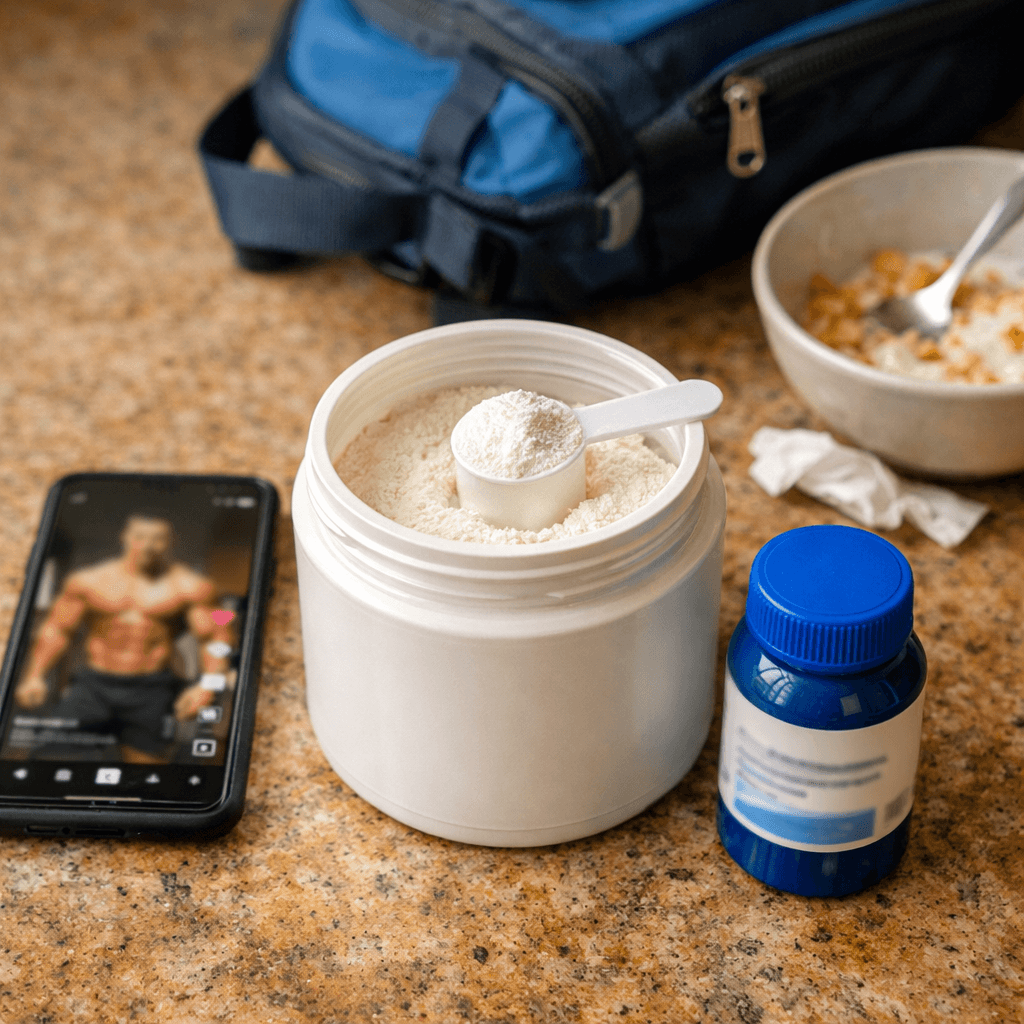
There’s a tub of white powder on your kitchen counter. Your teenager bought it, your friend sent you a TikTok about it, and now you’re wondering — should my child with ADHD be taking creatine? Let me save you some time and money.
First Things First: Creatine Is Not Protein Powder
I need to clear this up because I hear the confusion daily in my consulting room. Parents tell me, “We’ve started him on protein for his ADHD.” When I ask what they mean, they show me a tub of creatine.
Creatine and protein powder are completely different things. They sit next to each other on the shelf, they both come in tubs, and teenage boys mix both into shaker bottles. But they work in completely different ways.
Protein powder is basically food — dried, powdered protein from milk, eggs, or plants. It helps build and repair muscle the same way eating chicken or fish does. It has no specific brain claims.
Creatine is a naturally occurring compound your body already makes in small amounts. It helps your cells recycle energy. Your muscles use it. Your brain uses it. It’s found in red meat and fish. Only creatine is being hyped for mental health — which is why we need to talk about it.
What’s the Buzz About?
Here’s why creatine is suddenly in every ADHD Facebook group and wellness feed:
The logic sounds convincing. Your brain uses enormous amounts of energy. Creatine helps cells produce energy. So surely more creatine means a better-performing brain?
There’s real research — but not for ADHD. A few small studies in adults show creatine might help with depression when added to antidepressants or therapy. That’s genuinely interesting. But “might help adult depression” has somehow become “cures ADHD in children” by the time it reaches Instagram.
Teenagers are already using it for muscles. Up to forty per cent of senior school athletes use creatine. When it’s already in the house, parents start wondering if it could help their ADHD child too.
“Natural brain fuel” sounds much better than “unproven for your child’s specific condition.” The wellness industry is very good at marketing. And that’s exactly why we need to look at what the research actually says.
The Claims vs. The Evidence
Let me be as clear as I can about each claim doing the rounds.
“Creatine helps ADHD focus” No Evidence
There is not a single clinical trial — not one — testing creatine as a treatment for ADHD in children or adults. Nobody has given creatine to children with ADHD and measured whether their attention or impulsivity improved. That study simply doesn’t exist.
ADHD is primarily about how dopamine and noradrenaline work in the brain — the chemical messaging system. It’s not simply an energy problem. Think of it this way: if your car’s steering isn’t working, putting premium fuel in the tank won’t fix the steering.
“Creatine reduces anxiety” Almost Nothing
No clinical trials for anxiety. A couple of depression studies noted anxiety symptoms improved alongside depression — but that’s like saying “people who took painkillers for headaches also felt less stressed.” It doesn’t prove creatine treats anxiety.
“Creatine helps with depression” Early Research
This is the most promising area. A few small studies in adults show creatine added to antidepressants or therapy may improve depression symptoms. But these are small, early studies — not the kind of evidence that changes clinical practice yet. And most are in adults, not children.
“Creatine makes you smarter” Unproven
It might help your brain work slightly better when you’re severely sleep-deprived. But for everyday thinking? The European Food Safety Authority reviewed all the evidence in 2024 and concluded: no proven cause-and-effect relationship between creatine and improved cognitive function.
Is Creatine Safe for My Child?
This is the question that matters most. Let me be direct.
Strong safety record at 3–5g daily. Doesn’t damage kidneys, isn’t a steroid. Well-studied.
Only 13 studies. 268 total subjects. Not one designed to test safety. We’re essentially flying blind.
Says: don’t use creatine in children and teenagers until safety can be established.
Probably fine — but only for serious young athletes under proper supervision with good nutrition.
What We Do Know About Risks in Young People
Weight gain is guaranteed — one to three kilograms of water in the first week. This is water inside muscle cells, not actual muscle growth.
Gut problems — bloating, stomach cramps, and diarrhoea are common, especially at higher doses.
Airway changes — one study found concerning airway effects in young athletes, particularly those with allergies. If your child has asthma alongside ADHD (and many do), this matters.
Supplement quality isn’t guaranteed. Creatine products aren’t regulated like medicines. Some contain things not listed on the label.
Blood test interference: Creatine raises creatinine levels — the exact marker doctors use to check kidney function. This can trigger false alarms and unnecessary testing. Always tell your doctor if your child is using creatine before any blood work.
What About Mixing Creatine with ADHD Medication?
The honest answer: we don’t have good research on this combination in children.
Both stimulant medications and creatine are processed by the kidneys. Both can affect heart rate and hydration. Neither is dangerous alone in healthy people, but we haven’t studied them together in growing bodies.
The rule is simple: If your child takes any ADHD medication, do not add creatine without talking to their prescribing doctor first. And always mention supplements before blood tests.
The Conversation I Have Too Often
Parents spend months — sometimes years — trying supplements. Omega-3. Magnesium. Zinc. Probiotics. Now creatine. Each one costs money and, more importantly, costs time. Meanwhile, their child falls further behind at school. Self-esteem drops. Anxiety builds. Friendships struggle.
I’m not anti-supplement. If your child is genuinely deficient in iron or vitamin D, test for it and supplement appropriately. But none of these replace the proven treatments for ADHD: the right medication when indicated, structured support, and parents who understand how their child’s brain works.
The Teenage Boy Issue
I can’t write this article without addressing what’s really driving creatine use: teenage boys wanting to look bigger.
Social media has created a generation of boys who believe their bodies aren’t acceptable unless they’re lean and muscular by fifteen. Creatine does make muscles look bigger — it pulls water into muscle cells. For a teenage boy checking himself in the mirror, that’s incredibly motivating. But it’s water, not actual muscle growth.
If Your Teenager Is Already Using Creatine
Don’t panic. It’s not as dangerous as steroids. But do take these steps:
• Check the dose — 3 to 5 grams maximum. Many teens take far more.
• Check the product — creatine monohydrate only, reputable brand.
• Make sure they’re drinking significantly more water.
• Tell their doctor, especially if they’re on medication.
• Have the bigger conversation — about body image, social media, and what actually makes them valuable as a person.
If they haven’t started: the cautious, evidence-based advice is to wait until eighteen. Train properly. Eat well. Get advice from a qualified professional, not a TikTok influencer.
So What Should I Actually Do?
Your Action Plan — Starting Tonight
Stop. Don’t buy creatine for your child’s ADHD. There is no evidence it helps.
Check. If your teenager is already using creatine, have a calm conversation. Check the dose, the product, and make sure their doctor knows.
Focus on what works. ADHD medication (when appropriate), structured routines, understanding your child’s brain differences, and working with their school. These have decades of evidence. Creatine has none — for ADHD.
Test before you supplement. Ask your doctor to test for actual deficiencies — iron, zinc, vitamin D, magnesium. Supplement what’s actually low, not what’s trending.
Stay curious but sceptical. If creatine research advances to the point where it’s proven to help ADHD, I’ll be the first to update this advice. Science moves forward, and so do I. But today isn’t that day.
Remember This
The most powerful thing you can do for your child isn’t in a tub from the supplement aisle. It’s understanding.
When you understand how your child’s brain works — why they can’t “just focus,” why feelings get too big too fast, why they live in “now” and “not now” — you respond differently. And that changes everything.
No supplement replaces a parent who gets it.